



All Insights
Mini Blog | A Guide for Strata Managers
Helping Owners Understand the Value of an End to End Remedial Project Delivery Strategy
A Guide for Strata Managers
Strata Managers are often placed in the difficult position of explaining why a remedial project costs what it does, and why the “cheapest” option is rarely the safest or most cost‑effective in the long term.
When owners are unfamiliar with construction processes, design risk, compliance responsibilities, or the inherent complexity of remedial works, it can be challenging to articulate why an end‑to‑end project delivery model consistently delivers better outcomes.
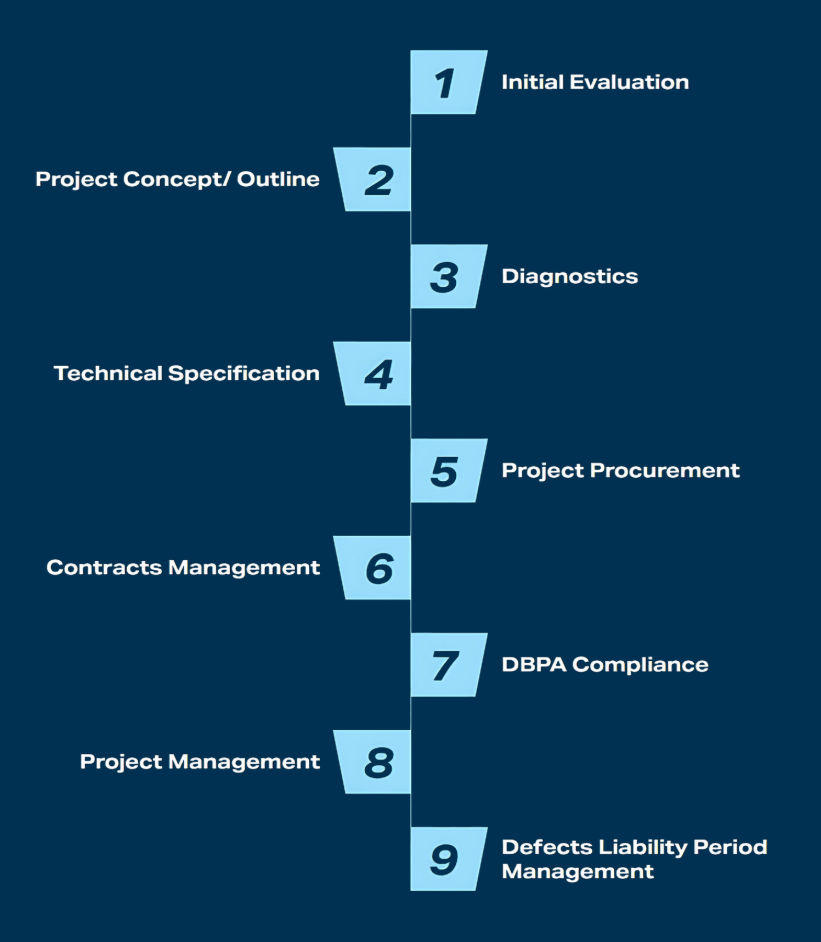
An end‑to‑end project delivery strategy for remedial works means that a specialist remedial design consultant is responsible for the entire project lifecycle, from inspections and investigations, through scoping, specification and tendering, to construction phase management and confirmation that the intended technical outcomes are achieved.
Under an end‑to‑end model, project delivery also integrates project management, contract administration, superintendence, and technical oversight. This integrated responsibility helps ensure small issues are identified and resolved early, rather than escalating into disputes, delays, and unexpected financial stress for owners’ corporations.
This article is intended to support Strata Managers by clearly explaining the benefits of appointing a remedial consultant with responsibility for end‑to‑end project delivery in a way that is practical, credible, and meaningful to residential owners.
Start With This Simple Principle: Accountability Matters
One of the clearest ways to explain the value of an end‑to‑end project delivery strategy for remedial projects to owners is through accountability.
In an end‑to‑end model, a single supplier is responsible for:
- Investigations and diagnostics
- Design and specification
- Tender support
- Oversight during construction
This means there is one party accountable for the outcome, not multiple consultants pointing fingers if something goes wrong.
For owners, this translates to:
- Less confusion
- Clear responsibility
- Cost effectiveness
- A defined party to engage if issues arise
A simple way to frame this is:
The same team that understands the building problems is responsible for making sure the solution is delivered correctly.
Explaining Prescriptive vs Performance‑Based Design in Plain Language
During a remedial project lifecycle, owners often question why significant work and costs are incurred before a builder is even engaged. This typically relates to the chosen design approach.
Having a prescriptive design, rather than relying on a performance‑based approach gives owners greater control and fewer surprises during the implementation phase. It also offers reassurance that the design will deliver the intended outcomes, supported by a project manager who is directly committed to and accountable for both the design and the results achieved.
Performance‑Based Design (Common but Riskier for Remedial Work)
- Broad objectives rather than detailed instructions
- Designs are often only 30–50% complete
- Builders decide how outcomes are achieved
- Materials and methods can change during construction
While this can appear cheaper initially, it gives builders significant discretion which may dilute remedial solutions.
Prescriptive Design (Best Practice for Remedial Projects)
- Detailed instructions on how the work must be done
- 80–100% documentation before construction starts
- Heavy upfront investigations and testing
- Minimal builder discretion
For owners, the key message is:
Prescriptive design is part of an end-to-end project delivery strategy, ensures the building receives the solution required to fully restore its integrity – not merely the lowest cost option that meets minimum standards. By holding a project manager accountable for the final design, owners gain confidence that the work will be delivered correctly and the intended outcomes will be achieved.
Why Upfront Investigation Saves Owners Money
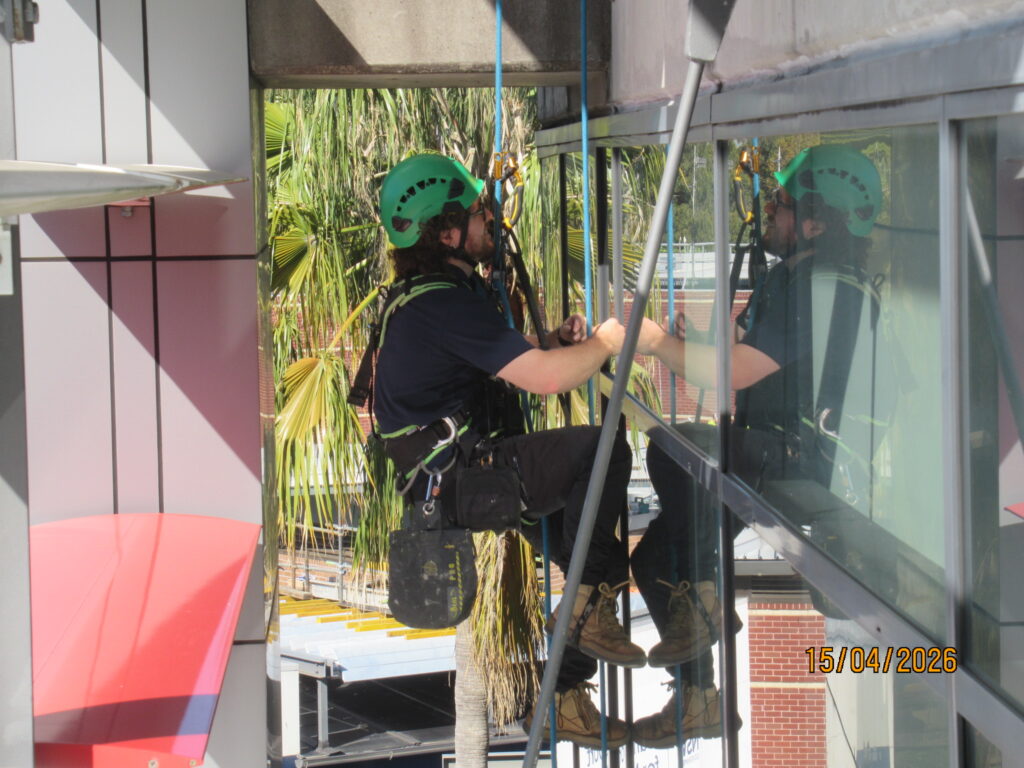
One of the hardest conversations for Strata Managers is explaining upfront investigation costs, particularly when owners see figures like $20,000–$50,000 before construction begins.
It helps to reframe this investment as insurance against much larger costs later.
Upfront investigations:
- Allow informed, accurate design
- Reduce redesign during construction
- Minimise variations and disputes
- Prevent learning ‘on the job’
Owners should understand that skipping investigations doesn’t eliminate cost, it simply shifts it into:
- Variations
- Delays
- Frustration
- Reduced confidence in outcomes
A simple explanation to owners is:
You either pay to understand the building issues upfront, or you pay far more to fix mistakes and attend to latent defects later.
Why More Consultants Doesn’t Mean More Value
In remedial works, many owners assume that appointing a separate project manager will automatically improve project outcomes, particularly as the project manager’s role and fee can appear independent of construction costs. For the type of remedial work we deliver, this assumption is often incorrect.
As an end‑to‑end project manager, we are driven to achieve the best possible outcome for owners. This means ensuring the project is thoroughly investigated and specified in a prescriptive manner, and then actively managing delivery to ensure all contractors strictly comply with that specification.
A critical part of this approach is technical project superintendence. Rather than simply managing programs and meetings, technical superintendence focuses on on‑site oversight of workmanship, sequencing, materials, detailing, and compliance with the specification. This technical presence allows issues to be identified and corrected early, design intent to be protected during construction, and remedial solutions to be delivered as designed, not diluted on site.
Unlike new builds, where many designers and consultants must be coordinated, remedial projects are usually led by a primary designer who carries professional indemnity risk. Sub‑consultants typically play targeted, supporting roles. In this context, technical oversight by the originating designer or specialist is far more valuable than generic project coordination.
Adding a third‑party project manager can:
- Increase complexity and communication layers
- Create opportunities for misinterpretation
- Blur accountability
- Add cost without reducing technical risk
A useful way to explain this to owners is:
A separate project manager may manage timelines, but technical project superintendence also ensures the remedial solution is built correctly and performs as intended
Supporting Better Tender Outcomes
Prescriptive, end‑to‑end delivery also improves the tender process, which is something owners care deeply about.
When all builders price the same detailed scope based on a prescriptive design
- Prices are closer and more competitive
- Hidden exclusions are reduced
- Builder risk allowances are more transparent
While variations can still occur, their likelihood and scale are significantly lower.
As one way of explaining it:
With an end-to-end project delivery strategy, everyone is pricing the same job to the same level not guessing what might be needed
Why End‑to‑End Project Management Leads to Better Control of Variations and Costs
In remedial projects, owners often view variations as a sign that something has gone wrong. In reality, variations are a normal and sometimes unavoidable part of working with existing buildings, the critical difference lies in how they are anticipated, explained, and managed.
An end‑to‑end project manager is uniquely positioned to do this well, because they are involved from initial investigation through to completion.
A robust end‑to‑end delivery model allows variations and contingency to be managed proactively through:
- Transparent tender documentation, based on a detailed, prescriptive scope
- Pre‑agreed rates for potential variation items
- Clearly defined contingency allowances, explained upfront
- Contingency levels aligned with the depth of investigations and building risk
Because the same team that investigated and designed the works is also overseeing delivery, variations are:
- Easier to justify technically
- Identified earlier
- Priced more accurately
- Managed with far less disruption
A helpful way to explain this to owners is:
Contingency isn’t overspending, it’s informed planning, based on an understanding of how older buildings actually behave
Why Trust and Teamwork Are Stronger Under an End‑to‑End Model
End‑to‑end project delivery strategy also sets the foundation for stronger collaboration and trust across all parties.
Projects consistently perform better when:
- Owners, consultants, builders, and Strata Managers work as a coordinated team
- There is transparency around scope, cost, and risk from the outset
- Decisions are informed by technical understanding, not just price
Because the end‑to‑end project manager owns the investigations, design intent, and delivery oversight, they are able to:
- Provide consistent advice
- Resolve issues decisively
- Avoid conflicting directions between consultants and contractors
By contrast, fragmented project structures can encourage an adversarial mindset particularly where parties are incentivised to protect their own scope or shift responsibility. This often leads to more disputes, more variations, and poorer outcomes, rather than savings.
An end‑to‑end approach replaces this with shared accountability, clearer communication, and a focus on delivering the right solution the first time.
The Message Owners Need to Hear
End‑to‑end, and a prescriptive remedial project delivery is not about spending more , it is about spending wisely.
When explained clearly, owners can see that this approach provides:
- Greater cost certainty
- Stronger accountability
- Better technical outcomes
- Reduced risk
- A smoother, less stressful project experience
For Strata Managers, framing the conversation around clarity, accountability, and long‑term value helps owners move beyond upfront cost and focus on what truly protects their building and their homes.
Conclusion
“We’ve built our business on standing by our designs. Adopting an end-to end project delivery model means we take responsibility not just for the design, but for its delivery onsite, so owners can be confident they are getting the outcomes the are paying for”
– Dennis Stephenson, Managing Director Diagnostech
Remedial projects involve complex technical and regulatory risks that are best managed through a clear, end‑to‑end project delivery strategy. By placing responsibility for investigations, design, tendering, project and construction oversight with a single, accountable consultant, owners gain clarity, confidence, and greater cost certainty.
For Strata Managers, this integrated approach provides a credible framework for explaining why prescriptive design, upfront investigations, and technical superintendence are essential, not optional. End‑to‑end delivery reduces disputes, limits variations, and ensures remedial works are delivered as intended.
Ultimately, end‑to‑end remedial project delivery is not about spending more, but about spending sensibly.
Glossary of Terms
| Term | Definition |
|---|---|
| Remedial Building Work | Remedial building work refers to repair, maintenance, upgrades, or defect rectification on existing buildings. It’s a broad term used to restore a building’s performance or compliance. |
| Design and Building Practitioners Act 2020 (NSW) – DBPA | The DBPA is legislation introduced in NSW to enhance accountability in construction by mandating practitioner registration, compliance declarations, and duty of care obligations. It ensures that both design and building work meet minimum standards. |
| Class 2 Building | A Class 2 building refers to residential apartments or townhouses with shared spaces like lobbies or basements. |
| Class 3 Building | Class 3 buildings are intended for long-term or transient accommodation for unrelated people, such as boarding houses or hostels. |
| Class 9C Building | A Class 9C building is a residential care facility that provides varying levels of physical assistance to residents, such as aged care homes. |
| Design Practitioner | Refers to a person who prepares regulated designs |
| Regulated Design | A Regulated Design is any design prepared for remedial work involving critical building elements like waterproofing or cladding. It must be developed by a registered practitioner and comply with legislation. |
| Exempt Works from Regulated Design | Works such as concrete repair or repainting are generally exempt from Regulated Design obligations. However, work on structural elements still requires proper supervision and may need approval. |
| Duty of Care (under DBPA) | The DBPA introduced a statutory duty of care requiring builders, designers, developers, and supervisors to avoid economic loss caused by defects. It applies broadly—even to building types outside DBPA. |
| Pafburn Case | In Pafburn Pty Ltd v The Owners – Strata Plan No. 84674 [2024] HCA 49, the High Court confirmed that head contractors and developers are responsible for defects caused by subcontractors, significantly extending liability. |
| Section 106 – Strata Schemes Management Act 2015 (NSW) | This section imposes a strict legal duty on owners corporations to repair and maintain common property in strata schemes. |
| Construction Issued Regulated Design | This is a final certified design prepared by a registered practitioner to ensure remedial work complies with DBPA and building codes. Required for Class 2 works and from July 2026 for Class 3 and 9C. |
What our clients say
"
Diagnostech were engaged by the owners corporation to investigate the cause of the water ingress affecting several apartments and provide recommendation for remedial repairs. David Chan has been an amazing engineer to work with, taking the time to explain in layman terms the cause of the fault, how the water enters the building and metholdology for repairs to comply with the legal requirements.
– Samantha Walker, Strata Assistant, Bright & Duggan
I have had the pleasure of working with Diagnostech on our current live project, and I can’t speak highly enough about the experience! From start to finish, their professionalism, expertise, and attention to detail were exceptional. Swahil Patil, Theriza and Raj took the time to thoroughly assess the complex issues and address them to ensure full compliance. Their wealth of knowledge is impeccable.
I highly recommend Diagnostech for any remedial engineering work. It’s rare to find someone so reliable and skilled, and I will definitely be reaching out for any future needs!
Thank you again for the fantastic service!
– Michael Parker, Senior Site Manager, RM Watson
What I find probably the most valuable thing about working with Diagnostech is that I really trust their advice and they have a very practical application to what we do and they understand our clients’ needs and just the way they deliver, they understand it.
– Rebecca Cleary, National EOS Optimisation Manager and Senior Director, Property & Asset Management, JLL
Diagnostech have been in the market for over 20 years. They’ve worked across a lot of buildings across Sydney and so they really have the know-how, technical knowledge and the ability to explain in layman’s terms to lay people, which is very valuable. Dennis truly is the most honest, integrity-driven building consultant out there.
– Sonia Jacob, Senior Buyers Agent – Residential, ProsperGroup
I enjoy working with Diagnostech because they have a detailed knowledge about buildings. Diagnostech are the experts and I know when I speak to them I can understand if what the client is seeking is relevant and they can provide the appropriate recommendation about how to handle a problem.
– Daniel Holt, Licensee in Charge, Strata Sense
We have enjoyed worked with Swahil & the team for the last year & would highly recommend them to anyone requiring façade engineering services on their project.
– Cardoe Contracting


